Festival of Lights

Tihar in Thankot: Five Days of Lights, Crows, Dogs and Laxmi

Five days in Kartik when the old bazaar is lined with oil lamps and singing groups work the lanes after dark.

Thankot.com Editorial Desk Last checked 31 August 2026 6 min read

Tihar runs for five days in the Nepali month of Kartik, which puts it in October or November, about a fortnight after Dashain. It is the most visually accessible festival in the Nepali year for an outsider: the lanes of old Thankot are lined with oil lamps, doorways are painted with red mud and rice flour, and groups of singers work the settlement after dark asking for a small payment at every door.

Nepali name: तिहार. Falls in Kartik (Kartik Krishna Trayodashi to Kartik Shukla Dwitiya, five days), October or November. The Gregorian date moves every year with the lunar calendar, so confirm against a current Nepali calendar before you travel.

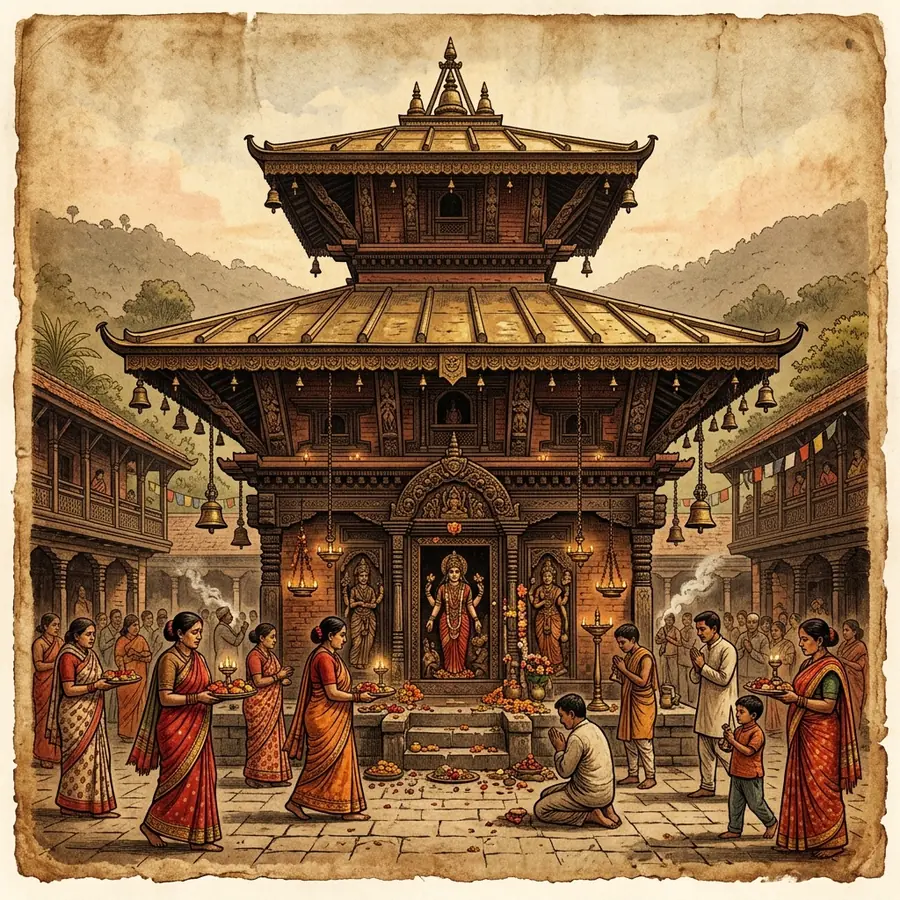
The Mahalaxmi Temple in Thankot, focus of Laxmi Puja

5 days

Festival length

Day 3

Laxmi Puja

Nights 3 to 5

Deusi Bhailo

c. 1690

Mahalaxmi Temple

When is Tihar?

Tihar occupies five days spanning the end of the dark fortnight and the start of the bright fortnight of Kartik, running from Kartik Krishna Trayodashi to Kartik Shukla Dwitiya. That falls in October or November, roughly a fortnight after Vijaya Dashami. The Gregorian dates shift annually with the lunar calendar.

The sequence matters if you are planning a longer stay in Thankot: Dashain in Ashwin, Tihar a fortnight later in Kartik, and then the Mahalaxmi Jatra about a fortnight after that, still in Kartik running into Mangsir. Autumn here is dense with festivals and the weather through all three is at its best.

What each of the five days is for

Day one: Kag Tihar

Rice and sweets are set out on a leaf plate for crows, who in Nepali tradition carry news and sorrow. You will see small offerings on rooftops and window ledges through the bazaar in the morning.

Day two: Kukur Tihar

Dogs are garlanded with marigolds, given red tika on the forehead and fed well, street dogs included. This is the day that circulates internationally every year, and in a settlement like Thankot where most of the dogs are semi-communal it is genuinely charming to walk through.

Day three: Gai Tihar and Laxmi Puja

Cows are honoured in the morning. At dusk the day turns: houses are cleaned, doorways are painted with red mud, and a trail of rice flour footprints is drawn from the street to the household shrine so that Laxmi, goddess of wealth, can find her way in. Rows of oil lamps go along every ledge and parapet. In Thankot the Mahalaxmi Temple is the natural centre of the night, since the settlement's presiding deity is Laxmi in her Mahalaxmi form.

Day four: Govardhan Puja and Mha Puja

Oxen are honoured, and a small hill of cow dung representing Govardhan is worshipped. Newar households instead keep Mha Puja, the worship of the self, which is also Newar New Year. Thankot has a long Newar settlement history, so both are kept here.

Day five: Bhai Tika

Sisters apply a multi-coloured tika to their brothers' foreheads, garland them with makhamali globe amaranth and give them food; brothers give gifts in return. Families reassemble for it and the roads are busy again.
Deusi and Bhailo: the singing at your door

From the night of Laxmi Puja onwards, groups go door to door singing. Bhailo is traditionally sung by girls and women on Laxmi Puja night; Deusi is sung by boys and men on the following nights. The lead singer calls a line and the group answers, there is drumming and often a great deal of noise, and at the end the household gives money, rice or sweets. The money often goes to a local club, a school fund or a temple repair.

If you are staying in a house in Thankot, expect several visits a night. Keep small notes ready. Turning a group away is acceptable but unfriendly; giving something small is the norm. Visitors are frequently pulled into the dancing, and refusing entirely is harder than joining in badly.

What Tihar looks like in the old bazaar

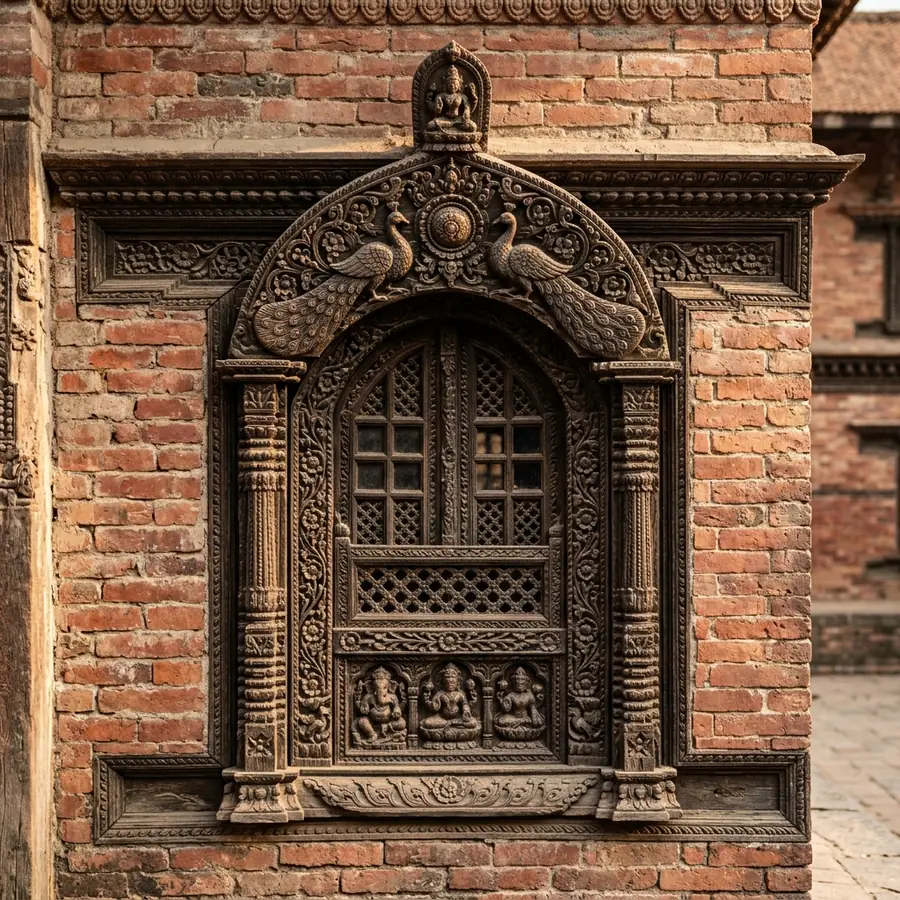
Thankot's older core has carved wooden facades and narrow lanes, and Tihar is the one week of the year when that architecture is lit the way it was designed to be lit. Walk the bazaar between about 7pm and 9pm on Laxmi Puja night and you get lamp rows along every ledge, painted thresholds, marigold strings across doorways, and the noise of Bhailo groups two lanes over.

Photographically it is the best evening of the Thankot year, and it is far less crowded than the equivalent in Patan or Bhaktapur. The chronicles section covers how the old settlement came to look the way it does.

How Tihar in Thankot differs from Tihar in the city

Three things separate Tihar in a settlement like Thankot from Tihar in central Kathmandu, and all three are in the visitor's favour.

Scale. The lanes are narrow and the houses are low, so a row of oil lamps along a parapet reads as a continuous line of light rather than as scattered points on a six-storey concrete facade. The same number of lamps simply looks like more.

The singing groups know each other. Deusi and Bhailo in a city neighbourhood is often a group of strangers working a block. Here it is the local club, the school, the temple committee, and the households they are calling on know exactly who is at the door and what the money is for. That changes the tone completely: it is closer to a village fundraiser than to carol singing.

Mha Puja is still kept. The Newar households of the old bazaar observe the worship of the self on the fourth day and mark Newar New Year with it, which is something you will not see in most of the newer settlements around the ring road. If you have any connection that gets you invited to one, take it: the mandala laid out on the floor for each family member, with its oil lamp and its offerings, is one of the more striking domestic rituals in the valley.

The trade-off is that there is no single set-piece to photograph. Nobody stages Tihar for an audience here. What you get instead is a settlement doing the thing for itself, which is why walking the bazaar slowly on Laxmi Puja night is the whole of the visit.

Practical notes for visitors

  • Buy before day three. Shops are packed with festival trade in the run-up and shut on the main days.
  • Carry small notes for Deusi and Bhailo groups.
  • Fireworks are common and safety standards are not. Keep away from the launching.
  • Dogs are being fed all day on day two. Do not be surprised by garlanded street dogs.
  • Ask before photographing inside a household shrine. Doorway and street shots are fine.
  • Long-distance travel is difficult again around Bhai Tika, when families reassemble.

In pictures

Carved wooden window in the old Thankot bazaar
The old carved facades of the bazaar are at their best when they are lit by lamps rather than by daylight.

Common questions about Tihar in Thankot

The questions people actually search for, answered plainly.

When is Tihar?
Tihar runs five days in the Nepali month of Kartik, from Kartik Krishna Trayodashi to Kartik Shukla Dwitiya, which falls in October or November, about a fortnight after Dashain. The Gregorian dates change each year with the lunar calendar.
What are the five days of Tihar?
Day one is Kag Tihar for crows, day two Kukur Tihar for dogs, day three Gai Tihar in the morning and Laxmi Puja at night, day four Govardhan Puja with Mha Puja and Newar New Year for Newar households, and day five Bhai Tika between sisters and brothers.
What is Deusi Bhailo?
Door-to-door festival singing from Laxmi Puja night onwards. Bhailo is traditionally sung by girls and women on the night of Laxmi Puja and Deusi by boys and men on the nights after. Households give money, rice or sweets, and the money is often collected for a local club, school or temple.
Is Tihar a good time for a visitor to be in Thankot?
Yes, probably the best of the autumn festivals for an outsider. It is not a crowd event, the old bazaar lanes are lit with oil lamps, and the celebrations happen in the street where anyone can see them. Travel is still difficult around Bhai Tika when families reassemble.

Keep reading

Temples, chronicles and practical guides connected to this festival.

Plan the trip around the festival

Bus routes from Kalanki, cable car fares up Chandragiri, and which months give the clearest air.