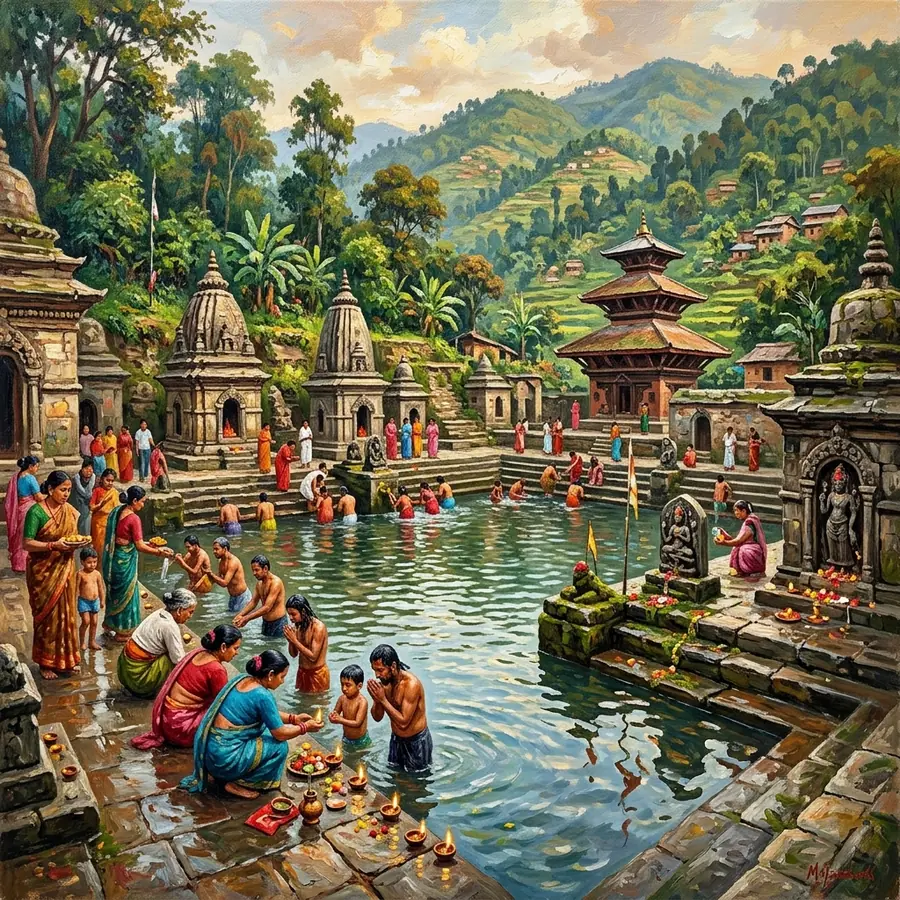
Mata Tirtha is a sacred bathing pond and temple complex on the western edge of the Kathmandu Valley, a short distance east of Thankot, and it is the site Nepal associates with Mother's Day. Entry is free, the complex is open from dawn to dusk, and on any ordinary day thirty to forty-five minutes covers it. On one day a year it is one of the busiest religious sites in the valley.
That day is Matatirtha Aunsi, literally the new moon of the mother pilgrimage, known in Nepali as Aama ko Mukh Herne Din, the day of looking upon your mother's face. It falls on the new moon of the month of Baisakh, which normally puts it in late April or early May. Those whose mothers are living give sweets, clothes and small gifts. Those whose mothers have died come here, bathe in the pond and offer tarpan, the water rite for the departed.
The site is a set of stone-lined tanks, small shrines and steps under trees, rather than a single grand temple. Its power comes from what happens at it, not from its architecture, and outside the festival it is a quiet place where a handful of people are usually making offerings at the water's edge.