Viewpoint and ride

Chandragiri Cable Car

The 2.4 km ropeway from Thankot to the 2,551 m ridge, nine to twelve minutes each way. Fares, running hours, queue timing and what is open at the top station.

Thankot Travel Desk Last checked August 2026 8 min read
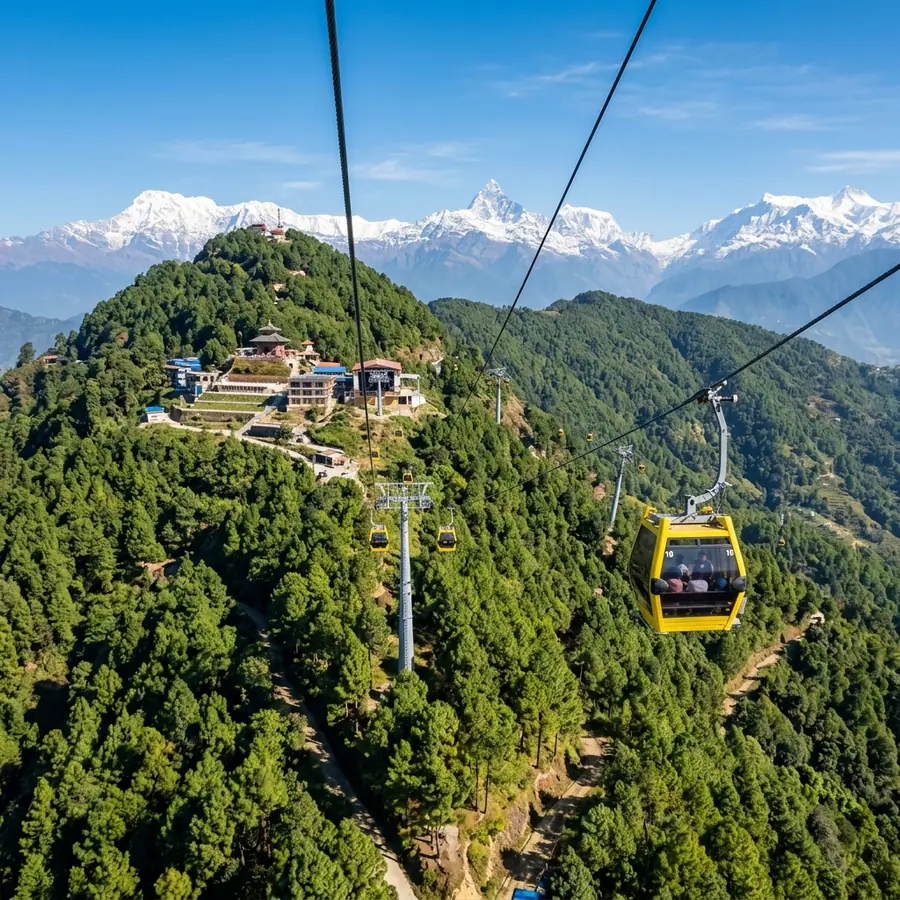
A cable car cabin climbing above pine forest towards the Chandragiri ridge
A cabin on the 2.4 km line between Thankot and the Chandragiri ridge.

A return ticket on the Chandragiri cable car costs roughly NPR 800 to NPR 900 for Nepali citizens and around USD 22 to USD 23 for foreign nationals, and the line normally runs from about 9am to 7pm every day of the week. The ride covers 2.4 km from the base station at Thankot to the summit ridge at 2,551 m and takes nine to twelve minutes, depending on wind and how often the cabins are held at the towers.

Fares are revised from time to time and are quoted in different currencies for different nationalities, so treat every figure on this page as a working range and confirm the current rate at the counter or with the operator before you travel. The categories in use are Nepali, SAARC, Chinese and other foreign nationals, with reduced child and senior rates on the Nepali scale.

What you get for the money is altitude you would otherwise have to walk for. The base station sits at around 1,450 m to 1,500 m on the valley rim, and the top station puts you on a ridge more than a kilometre higher, with Bhaleshwor Mahadev temple a five minute walk away and, between October and February, a clear line of sight along the Himalaya to the north.

How much is a Chandragiri cable car ticket?

Prices are set per nationality band rather than per person, which catches a lot of visitors out. The figures below were compiled in August 2026 from the operator's published rates and from Nepali travel agency listings that resell the same tickets. Treat them as a range, not a quotation.

Visitor categoryOne way (approx.)Return (approx.)
Nepali citizen, adultNPR 450 to 500NPR 800 to 900
Nepali child, roughly 3 to 12NPR 250 to 300NPR 450 to 500
Nepali senior citizenNPR 200 to 250NPR 375 to 425
SAARC nationalaround NPR 790around NPR 1,320
Chinese nationalaround USD 9around USD 16
Other foreign nationalaround USD 13around USD 22 to 23

Foreign rates are advertised in US dollars but paid in rupees at the counter's own conversion, so the rupee figure moves with the exchange rate. Nepali citizens are asked for citizenship identification to get the local rate, and students sometimes get a further concession on weekdays. Card payment is usually accepted at the base station, but carrying cash removes the risk of a machine being offline.

Confirm before you go. Fares change, festival-season surcharges appear, and package rates that bundle the ride with a buffet lunch are sold separately. The operator publishes current rates on its own site and at the base station counter.

What time does the cable car open and close?

The published running window is roughly 9am to 7pm daily, with some sources describing a pause around the middle of the day and others reporting continuous running. In practice the last cabin up leaves well before the advertised closing time, because the operator has to clear everyone off the ridge before dark. If you want to be certain of getting down, plan to be back at the top station at least an hour before closing.

When the queue is worst

Saturday is the Nepali weekend, and Saturday between about 10am and 1pm is the busiest window of the week at the base station. Public holidays, the Swasthani month of Magh and the days around Shivaratri all add pilgrim traffic on top of the sightseeing traffic. A weekday morning at opening is the quietest realistic slot, and it is also the clearest: haze builds through the day from late spring onwards.

Weather holds

Ropeways stop for high wind and for lightning risk. During the monsoon, from roughly June to September, an afternoon storm can suspend running for an hour or more at no notice. That is another argument for going early.

What the ride is actually like

Cabins are enclosed gondolas seating around eight people, and they load on the move at a walking pace, so there is a moment of shuffling before the doors close. The line runs 2.4 km with several towers, and the cabin bumps gently as it passes each one. The steepest part of the climb comes in the middle third, where the ground falls away under thick pine and rhododendron forest.

Photography through the glass works better than most people expect if you hold the lens close to the pane to kill reflections. Facing backwards down the valley gives you the widening view of Kathmandu; facing forwards gives you the ridge line and, on the way down in the late afternoon, the light on the valley floor.

If heights bother you, sit in the middle of the bench and look along the wire rather than straight down. The ride is short, and the cabins are stable except in gusty conditions.
What is at the top station

The ridge is a developed resort area rather than a bare summit. Within a short walk of the top station you will find:

  • Bhaleshwor Mahadev temple, the Shiva shrine that is the reason many Nepali visitors come at all. Entry is free and it is roughly five minutes on foot from the station.
  • The viewing deck and prayer flag terraces, which face north towards the Ganesh Himal, Langtang and Dorje Lakpa groups on a clear day.
  • Restaurants and a buffet hall, plus tea and snack counters. Prices are resort prices, noticeably above what the same tea costs in Thankot bazaar.
  • Paid activities that come and go by season, including a zip line, a small children's play area and horse rides on the meadow.
  • Hotel rooms on the ridge for anyone who wants to be up there at sunrise without the pre-dawn drive.

Snow falls on the ridge in some winters, usually in January or February, and when it does the base station queue triples within hours as the valley empties itself uphill.

What to wear and what to take

The ridge runs roughly 8C to 10C colder than the valley floor, and the wind on the open terraces makes it feel colder still. In December and January a fleece plus a windproof layer is the right call even if Kathmandu is pleasant in a shirt. In monsoon, take a rain shell rather than an umbrella: the wind on the ridge will destroy the umbrella.

  • Closed shoes with grip. The temple steps and the packed-earth paths get slippery when wet.
  • Cash in rupees for the temple offering tray, tea and the smaller stalls.
  • Sunscreen and sunglasses. At 2,551 m the sun is fierce even when the air is cold.
  • Water. It is sold at the top, at a mark-up.
  • A hat you can hold on to, or one that fastens.

Walk up, ride down

Buying a single one-way ticket down and walking up is the standard move for anyone who wants the hill rather than the ride. The Chandragiri hiking trail climbs roughly 4 km from the Thankot side and takes most walkers two to four hours, on a mix of dirt path and stone steps through forest. Coming down on the cable car saves the knees and costs about half the return fare.

If you do this, start early. Being on the ridge by mid-morning gives you the best chance of a clear northern horizon, and it leaves a wide margin before the last cabin of the day.

How to get to Cable Car

The base station is on the southern edge of Thankot, roughly 12 km west of central Kathmandu and about 1 km uphill from the Thankot checkpoint on the Tribhuvan Highway.

  • By local bus or micro: take anything running west from Kalanki towards Thankot or Naubise and get down at Thankot. Fares from Kalanki are small, typically well under NPR 50. From the highway it is a short walk or a very cheap shared jeep up to the station.
  • By taxi or rideshare: from Thamel or the Ring Road expect a metered or negotiated fare in the low thousands of rupees one way, more if you ask the driver to wait. Agreeing the return in advance is cheaper than finding a taxi at the base station in the evening.
  • By private vehicle: parking is available at the base station and fills on Saturdays. The last stretch of road is narrow and steep in places.

Full route detail, including which bus stands to use and how long each option takes at different times of day, is on the getting to Thankot page.

Questions

Common questions about Cable Car

The questions people search for most, answered with the figures we could verify.

How much is the Chandragiri cable car ticket for Nepali citizens?
A return ticket for a Nepali adult is around NPR 800 to NPR 900, with one way at roughly NPR 450 to NPR 500. Children aged about 3 to 12 and senior citizens pay less. Citizenship identification is asked for at the counter to get the local rate, and fares are revised periodically, so confirm at the base station.
What are the Chandragiri cable car opening hours?
The line normally runs from around 9am to 7pm daily. The last cabin up leaves earlier than the advertised closing time so that the ridge can be cleared before dark, and running is suspended in high wind or lightning, which is common on monsoon afternoons. Aim to be back at the top station an hour before closing.
How long is the Chandragiri cable car ride?
The line is 2.4 km long and the ride takes nine to twelve minutes each way, depending on wind and how often the cabins are held at the towers. Allow three to four hours in total for the return trip plus time at the top for the temple and the viewpoint.
Can you see Everest from Chandragiri?
On an exceptionally clear winter morning some visitors report picking out Everest far to the east, but it is distant, small and often lost in haze. What you can reliably see between October and February are the Ganesh Himal, Langtang and Dorje Lakpa groups to the north. Treat Everest as a bonus rather than a reason to buy the ticket.
Is there a hiking trail instead of the cable car?
Yes. A trail of roughly 4 km climbs from the Thankot side to the ridge and takes most walkers two to four hours on dirt path and stone steps. Many people walk up and buy a single downhill ticket, which costs about half the return fare.
Is the cable car suitable for elderly visitors and small children?
Yes. Cabins load at walking pace and the ride is short and enclosed, so the journey itself is manageable for most people. The ridge is cold and windy, and the path to Bhaleshwor Mahadev has steps, so plan for warm layers and a slow walk. Reduced fares apply for Nepali children and senior citizens.

Planning a visit to Cable Car?

Fares, bus routes, journey times and the months when the western rim is at its clearest.