Shivaratri is the peak, but it is the end of a longer season rather than an isolated night.
From the Poush full moon to the Magh full moon, roughly mid-January to mid-February, many
households across Nepal observe the Swasthani Brata Katha, a month of daily
recitation of the story of the goddess Swasthani accompanied by a fast. The narrative is
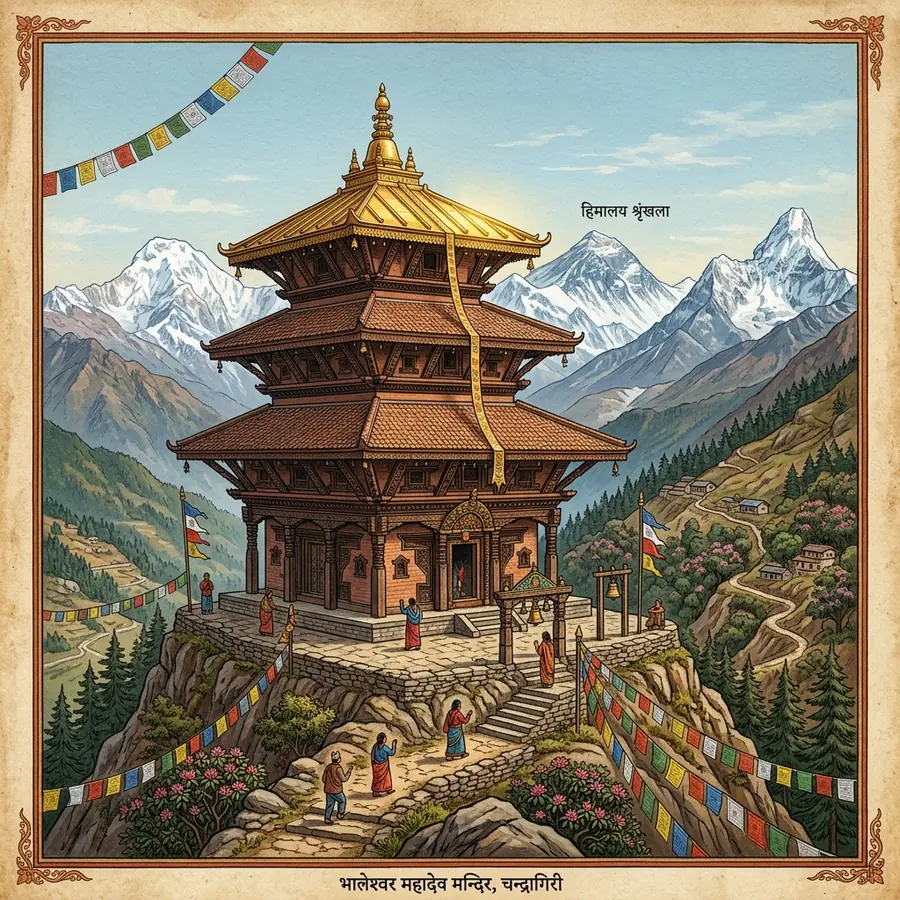
saturated with Shiva and with Sati, and Bhaleshwor Mahadev, as a Sati site and a Shiva
shrine, draws a steady stream of observers through the whole period.
The practical effect is that the coldest six weeks of the year are also the shrine's busiest
stretch outside festival days. Weekend cable car queues in Magh are longer than a first-time
visitor expects, and the summit temperature is at its lowest. It also means that if you want
the ridge to yourself, the window is the shoulder period in Poush before the recitation
begins, or the weeks after Shivaratri once Falgun is under way.
One more scheduling note. The Chandragiri ridge is at its clearest between roughly November
and February, which is exactly the Swasthani and Shivaratri window. If your interest is the
Himalayan view rather than the observance, you will be sharing the summit with pilgrims
whatever you do. Going up on a weekday morning is the compromise that works: the air is
still clear, the queue is short, and the shrine is active without being impassable. Our
seasonal guide sets out the trade-offs month by
month.